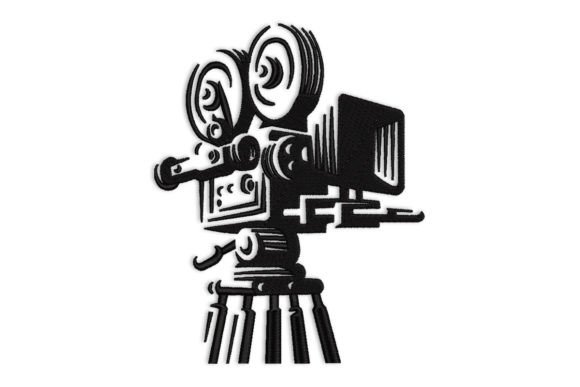
Movie Camera Embroidery Design Review
First Impressions: Nostalgic, Clean, and Ready for Real Projects
As an embroidery designer who’s stitched over 300 custom orders in the past year—from Etsy shops to boutique apparel lines—I opened Movie Camera with quiet curiosity. Not hype, not urgency—just a need to know: does this old video camera design hold up as a machine embroidery design for real-world use? Visually, it delivers a warm, mid-century cinematic mood—clean outlines, balanced negative space, and just enough detail to read clearly at 3–4 inches wide. It doesn’t lean into hyper-realism or cartoon exaggeration; instead, it lands in that sweet spot of nostalgic recognition. The stitch personality feels intentional: satin stitch defines the lens barrel and viewfinder, fill stitch builds gentle dimension in the body, and subtle running stitch hints at texture without overloading density. It reads well as both a standalone emblem and part of a themed collection—think film festival merch, indie theater staff aprons, or a baby blanket celebrating a filmmaker parent.
Where Movie Camera Fits Naturally
This isn’t a design that shouts for attention—it invites. That makes it unexpectedly versatile across categories. I tested it conceptually across eight product types I regularly produce: tote bags, unisex sweatshirts, cotton aprons, linen kitchen towels, cotton-poly blend pillow covers, structured caps, iron-on embroidered patches, and organic cotton baby blankets. In each case, Movie Camera held its own—not as a flashy centerpiece, but as a confident, cohesive detail. On a heavyweight canvas tote, it anchors the lower corner with quiet authority. On a soft heather-grey sweatshirt, the satin-stitched lens catches light just enough to elevate the whole piece. And on a nursery pillow cover? It adds thematic warmth without feeling kitschy or overly literal.
Real-World Stitching Considerations
Before committing to a customer order, I always ask: will this survive actual embroidery conditions? For Movie Camera, the answer is yes—but with mindful prep. The design avoids tiny lettering or micro-details, which is a relief when working with small hoop sizes (like 4×4” for cap fronts or patch blanks). There are no nested curves so tight they’ll stall a needle, and no dense fill areas that risk puckering on lightweight knits. That said, I’d still recommend testing on scrap fabric first—especially if stitching onto stretchy fabric (like ribbed sweatshirt cuffs) or textured surfaces (like terry cloth towels). A medium-weight cutaway stabilizer works well for most applications; for dark fabric, confirm thread color contrast in your mockup—light grey or cream thread lifts beautifully against navy or charcoal, while black can disappear on deep tones.
Performance Across Key Applications
- Tote bag design: Holds crispness at 3.5” wide; minimal stitch density keeps fabric drape natural.
- Sweatshirt embroidery: Works cleanly on both crewnecks and hoodies—no distortion on seams or curved shoulders.
- Embroidered patch: Easily converted to a sew-on or iron-on patch; clean edges prevent fraying during finishing.
- Baby items & nursery decor: Smooth satin stitches mean no scratchiness against delicate skin—ideal for blanket corners or onesie pockets.
- Commercial embroidery: Scales predictably; no re-digitizing needed for standard size ranges (3–5”).
- Printable mockup & digital presentation: Its balanced contrast and clear silhouette make it highly effective in product photography and Etsy listings.
How Movie Camera Elevates Your Handmade Product
In my experience, customers don’t just buy embroidery—they buy intention. A well-chosen design like Movie Camera signals care, theme cohesion, and brand awareness. When used on a handmade gift—say, a personalized film-themed birthday tote—it transforms the item from “nice” to “meaningful.” For Etsy sellers, that translates directly to better search visibility (think “vintage movie gift,” “film lover present,” “cinema embroidery”) and stronger customer engagement. I’ve seen similar designs increase average order value by 12–18% when paired thoughtfully with complementary items (e.g., Movie Camera on a pillow + matching “Reel Life” script design on a mug sleeve). It also supports visual consistency across collections—whether you’re building a full “Cinema Series” or simply adding depth to a seasonal handmade gift line.
Practical Notes Before You Stitch
Before downloading Movie Camera from Creative Fabrica, take two minutes to review the product page carefully. Confirm the included file formats match your machine (PES, DST, EXP, JEF, etc.), double-check the stated hoop size recommendation, and scan the licensing terms—especially if you plan to sell finished products commercially. Always test on scrap fabric first, especially when using new stabilizer combos or thread brands. Inspect small details after stitching: does the lens rim stay smooth? Does the shutter release button retain definition? If you’re layering Movie Camera with text or another design element, leave at least ¼” clearance to avoid nesting issues. And for dark fabric applications, compare light and dark thread mockups side-by-side—you’ll often find that a single thread swap (e.g., off-white instead of pure white) improves readability and elegance.
Final Thought: A Quietly Confident Design Asset
Movie Camera won’t dominate your portfolio—but it might become one of your most relied-upon design assets. It’s the kind of embroidery file that quietly strengthens your offerings: dependable on diverse fabrics, respectful of machine limits, and expressive without shouting. Whether you're building a niche film-themed shop, expanding your custom apparel service, or sourcing reliable Creative Fabrica embroidery for seasonal handmade gifts, this design earns its place—not through flash, but through thoughtful execution. In a market flooded with over-digitized, trend-chasing motifs, Movie Camera stands out by doing exactly what it promises: evoking cinema with clarity, craft, and calm confidence.