Butterfly Daisy: A Thoughtful Stitch for Real Projects
First Impressions: Whimsy with Intention
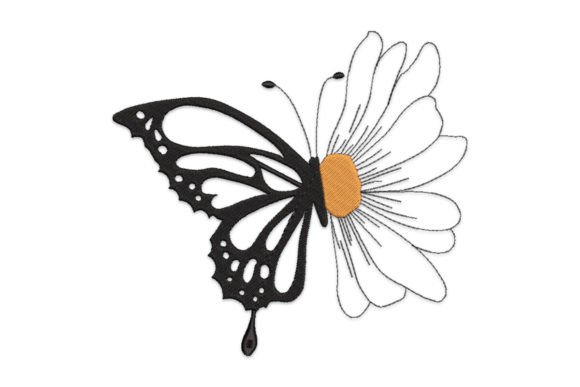
When Butterfly Daisy landed in my inbox, I paused—not because it’s flashy, but because it’s quietly clever. Half flower, half butterfly. Not a literal fusion, but a graceful visual conversation between two gentle motifs. It doesn’t shout “bug” or “bloom”; it hums. The shape sits comfortably within a soft oval footprint—neither too wide nor too tall—making it instantly adaptable for towels, pillow covers, and baby onesies without overwhelming the fabric. As a designer who regularly sources embroidery files for boutique clients, I appreciate how its balance avoids the trap of cuteness overload. It feels handmade, not mass-produced; delicate, but not fragile.
Real-Life Test: That Custom Tote Bag for a Local Florist
Last week, I used Butterfly Daisy on a natural canvas tote for a small-town florist’s spring launch. We stitched it centered on the front panel, just below the strap seam—about 3.5" wide. On unbleached cotton canvas, the design held its shape beautifully: the daisy’s outer petals used smooth satin stitch, while the butterfly wing details relied on fine running stitch and subtle fill stitch transitions. No puckering. No thread breakage—even at corners where the wing curves met the petal edge. Customers noticed it immediately: “Is that *hand-drawn*?” one asked. That’s the quiet strength of Butterfly Daisy—it reads as intentional artistry, not clipart.
Where It Shines (and Where to Pause)
Butterfly Daisy thrives in contexts where charm meets clarity:
- Custom apparel: Works cleanly on crewneck sweatshirts (medium-weight fleece), especially when placed on the left chest or back yoke. Avoid high-stretch knits unless you add lightweight cutaway stabilizer underneath.
- Baby embroidery: Perfect for onesies, burp cloths, and crib mobiles—its rounded lines feel soothing, and the lack of sharp angles or dense clusters makes it wash-friendly.
- Home decor: Stitches crisply on tea towels, linen pillow covers, and aprons. The motif reads well from across a room, yet holds detail up close.
- Holiday & gift embroidery: Subtly festive year-round—think Easter baskets, Mother’s Day hand towels, or baby shower guest towels. It avoids seasonal cliché while still feeling special.
- Etsy seller & small shop product: Photographs beautifully in natural light. Pair it with neutral backgrounds and minimal props, and it elevates your listing instantly—no over-editing needed.
That said, proceed thoughtfully in these cases:
- Curved surfaces (like caps): The wing’s gentle arc may distort slightly on a heavily curved crown unless digitized with cap-specific underlay—check if your version includes alternate cap-ready files.
- Dark or textured fabrics: On black terry cloth or heavy burlap, the finer wing veins can fade visually. Boost contrast by choosing a bright thread (teal, coral) or adding a light satin stitch outline.
- Tiny hoop sizes (< 4"): The design’s harmony relies on proportion—shrinking it below ~2.75" risks losing definition in the butterfly’s antennae and petal tips. Test first.
- Frequent-wash items: While the stitch density feels moderate (not overly dense), always use tear-away + light cutaway stabilizer combo on thin cottons to prevent backing show-through after laundering.
Design Judgment: More Than Just Pretty Stitches
As an embroidery product reviewer, I don’t just ask *“Does it stitch?”* I ask *“Does it earn trust?”* Butterfly Daisy does. Its clean line work and thoughtful spacing signal professionalism—not just to end buyers, but to fellow designers evaluating it as part of their own digital embroidery file library. For Etsy sellers, it adds quiet sophistication to personalized gifts: imagine it stitched beside a child’s name on a quilt square, or paired with a monogram on a linen napkin set. It doesn’t compete with the person—it complements them.
Visually, it supports brand consistency for makers who lean into organic, botanical, or mindful aesthetics. It’s not loud enough for streetwear, nor fussy enough for formal heirlooms—but it hits that sweet spot for cottagecore shops, eco-conscious boutiques, and wellness-focused brands. And because it straddles the Bugs and Embroidery categories without leaning too hard into either, it invites reinterpretation: swap thread colors for seasonal palettes, combine it with simple leaf motifs for a custom applique design, or layer it subtly behind sheer voile for nursery decor.
Practical Designer Notes Before You Stitch
Before loading Butterfly Daisy into your machine or listing it in your shop:
- Test it on scrap fabric matching your final project’s weight and weave—especially if using textured or stretchy material.
- Check thread color contrast early: what reads softly on ivory may vanish on oatmeal. Try it in black-and-white mockups to assess value separation.
- Review stitch density—not just for stability, but for breathability. This design leans balanced, but confirm no areas feel unnecessarily heavy.
- Verify hoop size compatibility. If stitching on a curved surface or tight seam (like a collar), measure your available space before committing.
- Inspect small details: antennae, petal edges, wing veining. Are they legible at your intended scale? Zoom in on your embroidery software preview.
- Confirm licensing terms. If selling finished products or bundling Butterfly Daisy as part of a digital embroidery file pack, ensure commercial use is permitted.
- Use appropriate stabilizer—lightweight cutaway for knits, tear-away for stable wovens, and fused mesh for sheer layers.
Butterfly Daisy isn’t a trend-chasing novelty. It’s a considered, quietly versatile embroidery file—the kind that becomes a staple in your rotation, not a one-off experiment. Whether you’re stitching a single personalized gift or building a cohesive line of handmade product, it brings grace without gloss, detail without distraction, and charm that lasts beyond the first wash.