Snow Embroidery Design Review
First Impression: Charming, Friendly, and Timelessly Winter-Ready
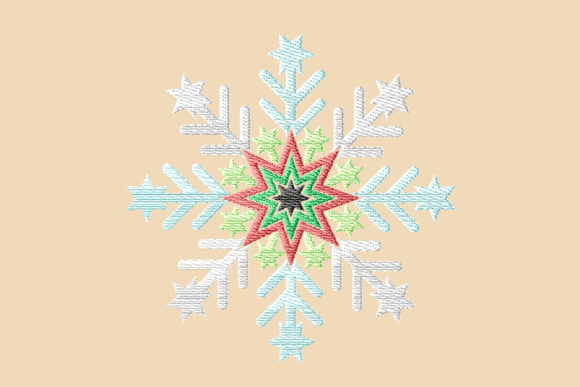
As an embroidery designer who’s developed hundreds of commercial designs for small businesses, my first read on Snow is immediate and intuitive: it’s a friendly, approachable winter motif—neither overly ornate nor starkly minimal. The title and description (“a charming and personalized touch to your fabric”) signal warmth, craftsmanship, and ease of use—not just decoration, but brand expression. It leans into the handmade product aesthetic without sacrificing polish, making it ideal for boutiques, cafés, florists, and local studios that want seasonal authenticity without cliché. For a machine embroidery design, Snow feels intentionally designed for versatility: soft enough for apron embroidery or tote bag design, yet structured enough to hold up in cap embroidery or staff uniform applications.
Real-World Business Performance Across Merchandise Types
Snow shines where small business merch needs personality *and* practicality. On embroidered patches—especially 2"–3" woven or chenille-style—it reads clearly as a signature winter accent for boutique merchandise or event merch. As a chest logo on staff uniforms or aprons, its balanced scale and gentle contours avoid visual heaviness while reinforcing seasonal cohesion. For cap embroidery, position it thoughtfully on the front panel or side gusset: its clean lines translate well even with moderate curvature, especially when paired with a subtle monogram or shop name nearby.
On tote bags and reusable packaging accents, Snow adds quiet distinction—ideal for a bakery wrapping holiday orders or a florist branding gift wraps. Its charm supports, rather than competes with, other design assets like typography or illustrations. For Etsy sellers and handmade brands, Snow functions beautifully in printable mockups: it photographs well against natural fabrics (linen, canvas, organic cotton), enhancing perceived value and artisanal credibility. In commercial embroidery settings—think wholesale apparel decorators producing for local pet brands or creative studios—it holds up across varied stitch density tolerances, assuming proper digitizing discipline was applied during file creation.
Where to Use Snow Thoughtfully (Not Everywhere)
Like any strong digital embroidery file, Snow has thoughtful boundaries. Avoid shrinking it below 1.5" for patch use—delicate details may blur or “fill in” on low-stitch-count runs, especially on textured fabric like fleece or heavy twill. Cap fronts with tight curves demand testing: if Snow includes fine interior linework or tightly spaced elements, distortion risk increases without precise underlay and tension calibration. Similarly, dark uniforms (navy, charcoal, black) require high-contrast thread colors—test white, cream, or light silver before bulk production. If the original embroidery file includes dense satin stitching or intricate outlines, confirm stitch count isn’t pushing limits for lightweight stabilizer or delicate fabrics like chambray or rayon blends.
Frequent-wash items—like café aprons or daycare staff shirts—demand attention to thread colorfastness and stabilizer integrity. Even a charming design like Snow can fray or pucker over time if not digitized with laundering durability in mind. Always inspect spacing between elements: cramped lettering or narrow gaps between snowflakes could trap lint or distort after repeated washing.
How Snow Strengthens Brand Identity and Customer Trust
For small businesses, consistency is credibility—and Snow delivers quiet cohesion. When used across apron embroidery, tote bag design, and cap embroidery, it becomes a subtle seasonal anchor, reinforcing brand identity without shouting. Customers recognize intentionality: a florist using Snow on winter bouquet tags *and* staff scarves signals care in presentation. A bakery applying it to holiday cookie packaging *and* employee sleeve accents builds visual rhythm that feels curated—not random.
This consistency directly impacts buyer engagement and perceived professionalism. Handmade product buyers respond to tactile authenticity; Snow’s implied softness and organic flow support that narrative. It avoids looking mass-produced or clip-art–adjacent—critical for Etsy sellers and crafters competing on uniqueness. When clients see Snow rendered cleanly in a printable mockup alongside their existing logo or palette, it elevates confidence in the finished product. That trust translates to higher perceived value, repeat orders, and word-of-mouth referrals.
Practical Designer Notes Before You Stitch
- Test in black and white first: Confirm legibility and balance without color distraction—this reveals spacing issues and density imbalances instantly.
- Verify small-patch viability: Resize to your target patch dimensions (e.g., 2" round or 1.75" square) and check for stitch overlap or lost detail.
- Review thread color contrast: Especially on dark or busy fabrics—what reads softly on white linen may vanish on charcoal denim.
- Inspect spacing and underlay: Tight curves or intersecting elements need solid underlay to prevent puckering on stretchy or unstable fabrics.
- Confirm hoop size compatibility: Ensure the design fits within your standard hoops—no last-minute resizing that compromises quality.
- Test on real fabric: Run a sample on your intended material (e.g., canvas tote, twill cap, cotton apron) with appropriate stabilizer—don’t rely solely on software simulation.
- Create a client-ready mockup: Use Snow in context—on a cap, tote, or apron—to secure approval before cutting thread.
- Compare beside other design assets: Does Snow harmonize with your logo, fonts, and seasonal palette—or does it visually compete?
- Confirm commercial licensing: Since this is for small business merch, branded patch use, and custom apparel, verify the embroidery file permits commercial embroidery and resale of finished products.
In short, Snow isn’t just a winter-themed machine embroidery design—it’s a flexible, brand-conscious tool. When applied with intention, it elevates everything from a local café’s holiday apron line to a florist’s limited-edition gift wrap. Its strength lies not in flash, but in fidelity: to craft, to clarity, and to the quiet confidence small businesses earn when every stitched detail feels purposeful.