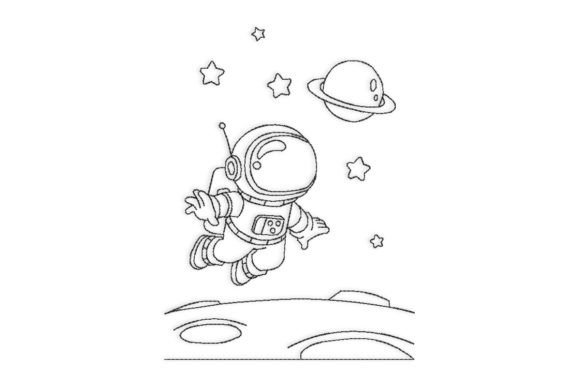
New Year Moon Star Party
First Impression: Festive, Modern, and Giftable
As an embroidery designer who’s prepped over 200 craft fair booths—from snowy winter markets to sun-drenched summer fairs—I immediately read New Year Moon Star Party as a joyful, modern celebration motif. It’s not overly literal like “2025” or fireworks, but leans into celestial charm—soft curves of a crescent moon, scattered stars, and implied festivity. That makes it versatile: it reads as elegant on linen pillow covers, playful on denim tote bags, and quietly sophisticated on minimalist tea towels. It feels premium without being stiff, festive without being kitschy—a rare balance for Anniversary-adjacent designs that need year-round appeal beyond December 31.
Where It Shines in Your Craft Fair Lineup
This machine embroidery design thrives where handmade intention meets visual clarity. At a crowded market, customers scan tables in under three seconds—New Year Moon Star Party delivers instant recognition. On a natural canvas tote bag? Perfect. The open negative space around the moon lets the fabric breathe, while the stars add sparkle without overwhelming. As apron embroidery? Ideal for the chest pocket or lower corner—small enough to feel intentional, large enough to catch light from across the aisle.
Tea towel embroidery is where this design truly earns its booth space. Cotton flour-sack towels have gentle texture and soft drape; New Year Moon Star Party lands with quiet confidence there—neither too busy nor too sparse. Embroidered patches made from this file also convert well: sew-on or iron-on versions become instant gifts (think “New Year’s Eve Kit” bundles with matches, mini champagne glasses, and a patch). And for pillow covers? Yes—especially in oatmeal, charcoal, or deep navy. The contrast lifts the design while keeping it cozy.
What Works—and What Needs Careful Handling
New Year Moon Star Party performs best as a medium-scale focal design—not tiny accent work, not massive back-panel coverage. It’s built for impact at 3.5"–4.5" wide, which fits cleanly inside standard 4x4 or 5x7 hoops. That’s good news for batch production: consistent hoop size means faster hooping, fewer stops, and smoother workflow during fair prep.
But caution points matter. If the file includes fine star points or delicate crescent outlines, stitch density could climb—especially in tight curves. Test on scrap fabric first. Thick fabrics (like duck canvas market bags or structured caps) may swallow subtle details unless you adjust stabilizer layers. For dark fabric, confirm thread colors provide enough contrast—silver or pale gold metallics pop, but standard ecru may disappear. And avoid shrinking it below 2.75": tiny lettering (if present) or narrow star arms risk fill distortion or skipped stitches on textured towels.
Photography & Online Appeal
This design photographs beautifully—clean lines, balanced spacing, and inherent symmetry make it ideal for printable mockups and Etsy listings. Unlike dense floral motifs, New Year Moon Star Party doesn’t muddy in flat-lay shots. Use natural light, neutral backdrops, and one real embroidered sample (e.g., on a folded tea towel beside a ceramic mug) to signal handmade quality instantly. Buyers scrolling Etsy or Instagram respond to that cohesion—it says “curated,” not “mass-produced.”
Booth Strategy: Stand Out Without Shouting
Your craft fair table isn’t just selling products—it’s selling mood, memory, and meaning. New Year Moon Star Party supports storytelling: “Celebrate small joys.” “Mark new beginnings.” “Gather with wonder.” Pair it with complementary pieces—e.g., a set of three embroidered napkins (moon, star, party banner) or a gift pouch + matching cap—to build perceived value. Customers don’t just buy a design; they buy the feeling it evokes—and this one leans into hopeful, grounded celebration.
In terms of brand consistency, it slots neatly alongside other celestial or seasonal motifs in your shop. If your line uses muted palettes and organic textures, New Year Moon Star Party reinforces that aesthetic. If you lean bold and graphic, consider simplifying the star count or adjusting thread weight—but keep the core shape intact. Its flexibility helps boutique makers maintain identity while rotating seasonal offerings.
Designer Notes You Can’t Skip
- Always test before cutting fabric: Run the embroidery file on scrap pieces of your target materials—especially textured towels, curved cap fronts, or thick pouch linings.
- Check thread contrast early: Metallics add shimmer but can snag on rough weaves. Matte cotton threads offer reliability and depth.
- Review spacing and stitch density: Overly tight fills heat up needles and cause puckering. Look for smooth transitions between moon curve and star points.
- Confirm hoop size and stabilizer needs: Lightweight tear-away works for stable cottons; cut-away adds security for stretchy knits or high-wear items like tote straps.
- Create at least one real mockup: A finished tea towel or pillow cover tells you more than any digital preview—about drape, sheen, and how light catches the stitches.
- Compare fabric colors side-by-side: Ivory thread on cream linen reads warm; on oatmeal, it recedes. Swatch first.
- Verify commercial licensing: Since this is positioned as a craft fair product and handmade product, ensure your embroidery file permits resale of finished goods. Don’t assume—check the source.
Final Thought: A Quiet Workhorse Design
New Year Moon Star Party won’t scream for attention—but it will hold it. It’s the kind of embroidery file that sells steadily across seasons, converts well online and in-person, and builds trust through consistency and care. For Etsy sellers juggling digital embroidery files and physical inventory, for small shop owners refreshing holiday-to-Anniversary transitions, and for creative entrepreneurs building signature collections—it’s not flashy, but it’s faithful. And in handmade markets, faithfulness—of quality, clarity, and charm—is what brings customers back year after year.