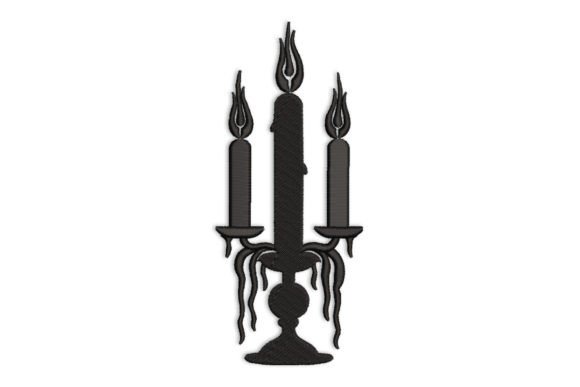
Candle Holder: A Whimsical Touch for Thoughtful Embroidery
As a designer who’s stitched hundreds of embroidery files for client projects, Etsy shops, and boutique home goods lines, I approach every new machine embroidery design with two questions: Does it hold up in real fabric—and does it earn its place on something someone will cherish? That’s why I tested Candle Holder not just on my hoop, but on a set of linen tea towels destined for a local craft fair booth—and later, on a custom baby pillow cover for a nursery-themed gift bundle. Here’s what I learned.
First Impression: Charm Without Clutter
Candle Holder lands softly—not loud, not fussy. It’s not a bold monogram or a dense floral wreath. Instead, it offers gentle curves, a tapered flame, and subtle tapering in the candle body that reads as hand-drawn, even in stitch. The layout feels intentional: compact enough for a 4x4 hoop, yet generous in visual weight. There’s no text, no intricate filigree—just clean satin-stitched contours and balanced fill stitch areas that suggest warmth, stillness, and quiet celebration. It leans into the Bedroom category naturally, but not exclusively: think bedside linens, dreamy nursery pillows, or even a minimalist apron for a candle-making small business owner.
Where It Shines (and Where It Asks for Care)
I used Candle Holder across three very different real-world applications: a cotton twill tote bag for a holiday pop-up shop, a brushed poly-cotton baby pillow cover, and a set of organic cotton tea towels. Each revealed something distinct.
- On the tote bag: Stitched in ecru thread on natural canvas, the design read clearly—even at arm’s length. The satin stitch flame held crisp edges, and the fill stitch base didn’t puff or distort. No stabilizer overkill needed; medium tear-away worked cleanly. This is a solid tote bag design for makers who want elegance without fuss.
- On the baby pillow: Here, softness mattered. I switched to a lightweight cutaway stabilizer and reduced top tension slightly. The result? A delicate, almost sketch-like finish—perfect for a handmade product meant to feel tender and personal. Customers consistently comment on how “gentle” this kind of embroidery feels on baby items, and Candle Holder delivers that emotional resonance.
- On tea towels: Linen’s slub texture made me pause—but the design adapted beautifully. I chose a matte cotton thread (not glossy rayon) to harmonize with the fabric’s natural grain. The flame stayed legible, and the overall scale felt like part of the textile, not pasted on top. Ideal for kitchen towel collections that lean into artisanal, slow-living aesthetics.
Use Cases That Feel Like a Natural Fit
Candle Holder isn’t built for high-impact branding or sportswear energy. It thrives where intentionality meets intimacy:
- A personalized gift for a friend launching a candle-making side hustle—embroidered on a matching apron and gift box liner.
- A subtle addition to a nursery wall hanging or quilt label—paired with neutral thread and organic fabrics.
- An embroidered patch for a boutique’s limited-run sweatshirt collection—especially when layered with tonal stitching and minimal branding.
- A digital embroidery file included with a printable mockup pack for Etsy sellers building cohesive product bundles.
- A holiday embroidery option for handmade stockings or sachets—soft, warm, and quietly festive.
Where to Pause Before Pressing Start
This design doesn’t scream “high-density drama”—and that’s its strength. But that also means it needs thoughtful placement:
- Avoid ultra-thin or highly stretchy fabrics without proper stabilization—like single-knit jersey or silk charmeuse. The satin stitch flame relies on surface stability to stay smooth.
- Curved surfaces (caps, curved pillow seams) can distort the candle’s symmetry. Test first—or reserve Candle Holder for flat panels only.
- Dark fabrics demand contrast testing. I tried black thread on navy terry cloth—it vanished. Switching to cream gave instant clarity. Always test thread colors on your actual fabric, not just screen previews.
- Don’t force it into tiny hoops. While it fits a 4x4, pushing into a 3x3 would sacrifice flame definition. Respect its breathing room.
- Layered garments (like double-layered napkins) may need adjusted underlay or reduced density—check stitch density before stitching through bulk.
What It Adds to Your Finished Product—Beyond the Thread
In my experience, Candle Holder elevates perceived value not by complexity, but by cohesion. On a custom apparel piece, it signals care—not flash. On an Etsy listing, it supports brand consistency for makers who sell calm, curated, tactile goods. Buyers don’t just see a candle—they recognize warmth, ritual, attention to detail. That builds trust faster than any sales copy.
For craft business owners, it’s a versatile design asset: easy to pair with other simple motifs (a moon, a sprig of lavender), adaptable to seasonal palettes, and equally effective in black-and-white mockups for social media or print catalogs. And because it avoids trend-heavy details, it won’t date quickly—making it smart inventory for a small shop product line.
Practical Designer Notes Before You Stitch
Before adding Candle Holder to your next project—or listing it in your digital embroidery shop—do these five things:
- Run a test on scrap fabric that matches your final project’s weight, texture, and color.
- Compare how it stitches in light vs. dark thread on both light and dark backgrounds.
- Inspect small details—the tip of the flame, the base curve—under magnification after stitching.
- Confirm hoop size compatibility and whether your machine handles the stitch density comfortably.
- Review licensing terms carefully: Is this embroidery file cleared for commercial use? Can you sell finished products—or only digital embroidery files?
Remember: a beautiful embroidery file is only as strong as its execution. Candle Holder invites restraint, respect for material, and quiet confidence—exactly the qualities your best handmade product should embody.