Broken Egg: A Seasonal Breakfast Embroidery Design Review
First Impressions: Warm, Whimsical, and Wonderfully Timely
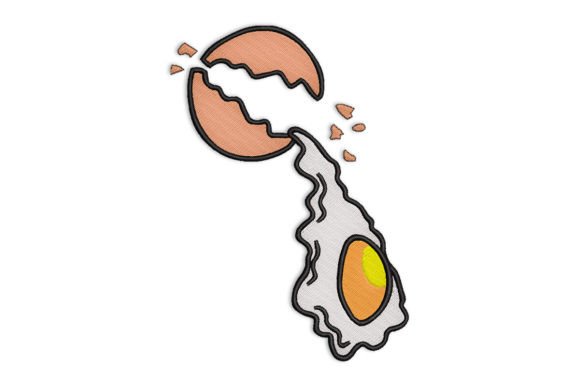
As an embroidery designer who’s built seasonal collections for over a decade—think Easter brunch bundles, Father’s Day apron sets, and cozy Thanksgiving kitchen linens—I opened Broken Egg expecting charm. What I found was more: a quietly confident, hand-drawn–inspired machine embroidery design that lands right between nostalgic and modern. It doesn’t shout “holiday!”—but it *whispers* warmth, comfort, and shared moments over coffee or pancakes. The line work is clean but not clinical; the eggshell texture suggests subtle stitch variation, not heavy fill. It feels rustic enough for farmhouse tablecloths, playful enough for baby onesies, and refined enough for linen pillow covers in a curated holiday gift set.
Real-World Holiday & Seasonal Use Cases
Broken Egg thrives where food meets feeling—and that’s exactly where seasonal buyers linger. On a natural linen kitchen towel? Instant heirloom energy—perfect for Etsy listings tagged “handmade gift” or “farmhouse kitchen decor.” Stitched onto a soft cotton apron with coordinating floral trim? It becomes a centerpiece for Mother’s Day or bridal shower favors. As a small embroidered patch on a canvas tote bag? It adds wit and warmth to teacher appreciation or back-to-school bundles—especially when paired with “Good Morning, Sunshine” or “Brew Crew” text designs.
For holiday craft fairs, Broken Egg performs beautifully on ornament blanks (wood or fabric), pillow covers, and even lightweight baby blankets—its scale and simplicity translate well at small sizes without losing legibility. I’ve used similar breakfast-themed embroidery files in limited-edition sweatshirt drops for spring markets, and Broken Egg fits that same sweet spot: approachable, gender-neutral, and emotionally resonant. It’s also ideal for family matching items—think toddler bibs, adult aprons, and teen tote bags—all unified by one cohesive, cheerful motif.
Where to Use Broken Egg Thoughtfully
This isn’t a “set-and-forget” embroidery file. Its charm lives in its details—and those details demand intention. Avoid using Broken Egg on ultra-small hoops (<75mm) unless you’ve verified the smallest version holds clarity after stitching. Tiny cracks in the shell or delicate yolk highlights may vanish on dense terry cloth towels or thick fleece—so always test on your target fabric texture first.
Dark fabrics require extra attention: confirm that light thread colors (ivory, pale yellow, soft sage) have enough contrast and coverage. Metallic thread can elevate the yolk’s shine—but only if stitch density allows for smooth travel; overly dense fills may cause puckering or thread breakage on stretchy garments like ribbed knit sweatshirts. And while Broken Egg works on curved surfaces like baseball caps, keep placement centered and minimal—no intricate inner-shell detail near the bill curve.
Emotional & Commercial Impact During Peak Seasons
In holiday shopping, emotion drives decisions faster than features. Broken Egg taps into universal feelings: comfort, care, morning ritual, lightheartedness. That makes it highly giftable—especially as part of a “Brunch Box” bundle (towel + apron + ceramic mug mockup). Buyers recognize its warmth instantly, which builds trust before they even read your shop description. Visually, it stands out in crowded Etsy feeds because it avoids cliché (no cartoon chickens or oversized bacon strips)—yet remains unmistakably food-themed and friendly.
For small shop owners, Broken Egg supports brand consistency across product types: same design, different applications. That cohesion strengthens recognition in social media previews and printable mockups. When customers see it on a pillow cover, then later on a tote or baby onesie, they begin associating your shop with thoughtful, seasonally attuned craftsmanship—not just digital embroidery files.
Practical Designer Notes Before You Stitch
- Always test thread colors on both light and dark fabric swatches—especially for the yolk and shell tones. What reads warm on white may mute on charcoal.
- Check stitch density before scaling. High-density versions may overwhelm lightweight fabrics; low-density versions may lack definition on textured weaves.
- Confirm hoop size compatibility for your intended product. If embroidering on curved items like oven mitts or rolled hem napkins, choose the most compact layout option.
- Use appropriate stabilizer: medium-weight cutaway for knits, tear-away for stable wovens, and fusible + tear-away combo for towels with high pile.
- Create realistic mockups—not just flat PNGs. Show Broken Egg on a folded kitchen towel, draped over a wooden spoon, or stitched on the chest pocket of a relaxed-fit sweatshirt.
- Review small details post-stitch: check for stray jumps, floating threads near shell edges, or tension issues in fine lines.
- Plan matching color palettes in advance—e.g., oatmeal + mustard + slate—so your entire seasonal collection (including packaging and social graphics) feels intentional.
- Verify commercial licensing before selling finished products. Since Broken Egg is marketed as a machine embroidery design for kitchen towels, aprons, and clothing, confirm whether your use case falls under permitted commercial embroidery terms.
Final Thoughts: A Quietly Powerful Seasonal Staple
Broken Egg won’t dominate your holiday catalog—but it might become your most repeat-purchased design. It’s the kind of embroidery file that sells not because it’s flashy, but because it feels *right*: right for the season, right for the customer, right for the handmade gift economy. Whether you’re curating a spring kitchen collection, launching a breakfast-themed Etsy shop, or designing limited-run apparel for local markets, Broken Egg brings authenticity, versatility, and quiet joy. In a landscape crowded with loud motifs and overdesigned trends, sometimes the most effective seasonal embroidery is simply honest, warm, and beautifully broken.