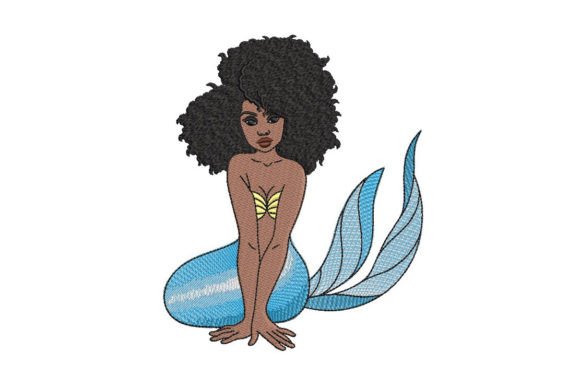
Black Mermaid Afro Girl: A Designer's Review
I have been designing and selling machine embroidery at craft fairs and handmade markets for over a decade. When I first opened the Black Mermaid Afro Girl file, I knew immediately this one had booth potential. It is not just another mermaid design. It carries identity, texture, and a kind of quiet confidence that translates beautifully onto fabric. For anyone building a craft fair product line that needs to feel both fresh and meaningful, this design deserves a serious look.
First Impression: What This Design Communicates
The Black Mermaid Afro Girl design lands somewhere between bold and soulful. It is not overly cute, not aggressively edgy, and not trying to fit the standard fairy tale mold. The afro silhouette gives it texture and movement. The mermaid form keeps it whimsical. Together, they create a look that feels modern, celebratory, and deeply personal. This is the kind of design that makes a customer stop mid-step at a booth, tilt their head, and smile. It reads instantly as intentional representation, and that matters in today's handmade market.
From a product development standpoint, the design has strong visual weight. It works as a focal point. You do not need to add much. A simple placement on a natural canvas tote or a soft cream apron lets the design do all the talking. That simplicity is gold when you are prepping inventory for a weekend market and need every piece to look finished and professional.
Where This Design Shines Brightest
Not every machine embroidery design works across multiple product types. Some are too dense for thin fabrics. Others lose impact when scaled up. Black Mermaid Afro Girl feels versatile in all the right ways. Here is where I see it performing best in a craft fair setting.
Tote Bags and Market Bags
A natural cotton tote with this design centered on the front pocket or main panel is an easy bestseller. The contrast between the textured afro stitches and the flat weave of the tote fabric creates a tactile quality that customers love to touch. I recommend a medium placement, large enough to read clearly from across the aisle but not so oversized that it overwhelms the bag shape. For Etsy seller listings, this product photographs beautifully in flat lay with a few simple props.
Aprons and Kitchen Towels
On a linen-blend apron, Black Mermaid Afro Girl brings an unexpected elegance to kitchen wear. The design softens the utilitarian feel of an apron and turns it into something giftable. For tea towel embroidery, I suggest using a smooth, tightly woven cotton or linen towel. Avoid heavy texture or waffle weave, which can distort the finer details of the afro curl pattern. A well-pressed towel with this design stitched near the bottom hem or centered on a folded edge makes a lovely booth display piece.
Embroidered Patches and Small Pouches
If you sell embroidered patch products, this design is a strong candidate for patch conversion. The silhouette reads cleanly even at reduced sizes, though you must watch for detail loss in the hair texture at anything below three inches. For small zip pouches or cosmetic bags, placing the design on the front panel creates a boutique feel that commands a higher price point. These smaller items are perfect for impulse buyers at craft fairs who want something unique but affordable.
Caps and Curved Surfaces
Placing this design on a cap requires careful hoop positioning. The afro shape has a rounded top that can either complement or fight the curve of a cap crown. I recommend testing the placement on a scrap cap first. Center the design slightly lower than you think, so the top of the afro does not wrap too far over the crown seam. When done correctly, the result is striking and sells well to a younger demographic at markets.
Pillow Covers and Home Decor
A linen pillow cover with this design in a soft thread palette, perhaps deep browns and warm golds, becomes a statement piece. Home decor buyers at craft fairs are often looking for items that feel curated and personal. Black Mermaid Afro Girl on a throw pillow cover offers exactly that. It is decorative without being mass-produced looking, and it pairs well with both modern and eclectic booth aesthetics.
Practical Production Notes from the Worktable
Before you stitch this design onto twenty tote bags for Saturday's market, let me walk through what I learned during testing. These notes are the difference between a polished finished product and a wasted blank.
Fabric and Stabilizer Choices
This design has areas of concentrated stitching, particularly in the afro texture. On lightweight fabrics, use a medium-weight cutaway stabilizer. Do not rely on tear-away alone. The dense curl sections need a stable foundation, or the fabric will pucker and warp after the first wash. For apron embroidery on medium-weight cotton, a fusible cutaway stabilizer gives excellent results. On towels, add a water-soluble topper to prevent the stitches from sinking into the pile.
Thread Colors and Contrast
The thread colors you choose will dramatically shift the mood of this design. A monochromatic approach using deep espresso, warm caramel, and soft gold creates a rich, tonal look. High-contrast combinations, like black thread on a cream background, make the silhouette pop and read clearly from a distance. Test your thread palette on the actual fabric color you plan to sell. The same thread reads differently on natural linen versus bright white cotton. I always keep a stitched sample of each colorway pinned to my booth table for reference.
Hoop Size and Placement Precision
The product description mentions this design comes in four sizes across popular formats. That is a significant advantage for production flexibility. You can use the larger size for tote bags and pillow covers, the medium for aprons and tea towels, and the smaller for patches and pouches. Always confirm the exact hoop size required for each size before loading your machine. A mismatch here can waste time and materials. I keep a printed size chart inside my embroidery supply box for quick reference during batch production.
Stitch Density and Small Detail Watchpoints
The afro texture is the signature element of Black Mermaid Afro Girl, and it is also the most technically demanding. If the stitch density is too high in the curl sections, you may experience thread breaks or needle deflection on thicker fabrics. If it is too low, the texture loses definition. Before committing to a full production run, stitch one sample and examine the afro area under good light. Look for gaps, loose threads, or puckering. Adjust your machine tension slightly if needed, and always use a sharp needle appropriate for the fabric weight.
Small details in the facial features and tail fin also deserve attention. At the smallest size, these details may become less defined. If you plan to sell the design as a small accent on a pocket corner or a narrow pouch panel, verify that the face remains clear and the expression is still recognizable. A blurry face on an otherwise beautiful design will hurt your booth credibility.
Dark Fabric and Thread Considerations
Many sellers are tempted to stitch this design on dark fabric for dramatic effect. Be cautious. The afro silhouette can blend into a dark background if the thread colors are not chosen with enough contrast. If you want to use a deep navy or charcoal fabric, select thread colors that are at least two shades lighter than the background so the design stays visible. A test stitch on a scrap of the actual dark fabric is non-negotiable here.
Booth Display and Customer Engagement
At a busy craft fair, you have about three seconds to catch a shopper's eye. Black Mermaid Afro Girl does this work for you. The silhouette is recognizable even from a distance. I recommend displaying at least one large-format version prominently, perhaps on a hanging tote bag at eye level or a framed pillow cover on an easel. Surround it with smaller products featuring the same design to create a cohesive collection feel. This builds trust and encourages multiple-item purchases.
When customers approach, they often want to touch the stitched texture. Let them. The tactile quality of the afro stitching is a selling point. Keep a sample piece specifically for handling, and make sure it is securely stabilized so it holds up to repeated touching throughout the day.
Photography and Online Listing Potential
For Etsy seller shops and online handmade stores, this design photographs exceptionally well. The textured afro catches light in interesting ways, and the mermaid silhouette provides a clean, recognizable shape even in thumbnail size. When creating printable mockup images for your listings, show the design on at least three different product types and fabric colors. This helps buyers visualize the design in their own lives and increases conversion rates.
Use natural light whenever possible. The stitch texture reads best with soft, directional lighting that creates subtle shadows. Avoid harsh flash that flattens the dimensional quality of the embroidery. If you are building a digital embroidery file shop, include clear, well-lit photos of the actual stitched design, not just software previews. Buyers trust what they can see on real fabric.
Commercial Potential and Repeatable Production
For small shop product owners and boutique makers, Black Mermaid Afro Girl fits a repeatable production model. The design stitches consistently once you dial in your stabilizer and thread settings. It is not overly complex in a way that slows down batch production, yet it delivers enough visual impact to justify a premium retail price. This balance is exactly what you want when you are building inventory for multiple markets or restocking your online store.
Before selling finished products, confirm the commercial embroidery licensing terms included with your purchase. The product description states the design comes in several popular formats, but you should verify that commercial use is permitted for physical items sold at craft fairs and online. Most designers include this information in the download package, so check before you invest in blanks and thread.
Final Worktable Checklist Before Market Day
Here is my personal checklist when working with this design. I run through it every time I prep a new product line.
- Stitch a test sample on scrap fabric identical to your final blanks
- Check thread contrast on each fabric color you plan to offer
- Review spacing and placement, especially on curved items like caps
- Confirm the correct hoop size for each size variant
- Inspect stitch density in the afro curl sections under magnification
- Use the right stabilizer for each fabric type
- Create at least one real mockup, not just a digital preview
- Compare how the design looks on light, medium, and dark fabric
- Verify commercial embroidery licensing before selling finished goods
- Press and finish every piece before it goes on display
This design, rooted in the Fairy Tales category, carries a narrative weight that goes beyond simple decoration. It tells a story. At a craft fair, stories sell. Customers connect with meaning. Black Mermaid Afro Girl gives you a product that feels personal, looks professional, and stands out in a sea of generic embroidery. That is the kind of design asset worth investing in when your booth space is limited and every product needs to earn its spot on the table.
Whether you are stitching for a weekend market, restocking an Etsy shop, or building a boutique product line, this design brings the visual appeal, customer engagement, and practical production quality that makes a handmade product move from the shelf to the shopping bag. Test it thoroughly, pair it with quality blanks, and let it speak for itself. In my experience, that is exactly what it does.