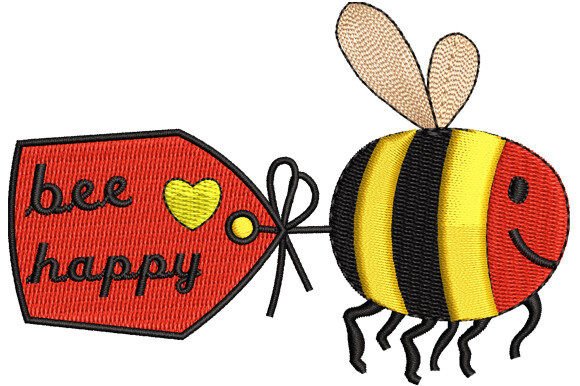
Bee Happy Honey Bee Embroidery Design Review for Business
As an embroidery designer who has tested hundreds of machine embroidery design files for commercial use, I pay close attention to how a design translates from screen to stitched reality. The Bee Happy Honey Bee design caught my attention immediately because it sits at the intersection of playful charm and professional versatility. When a small business owner asks me whether a design will work for branded merchandise, patches, or uniform accents, I evaluate it through a completely different lens than someone stitching for personal enjoyment. This review breaks down exactly how Bee Happy Honey Bee performs when the goal is creating a finished product that customers will pay for and wear with pride.
First Impressions of Bee Happy Honey Bee
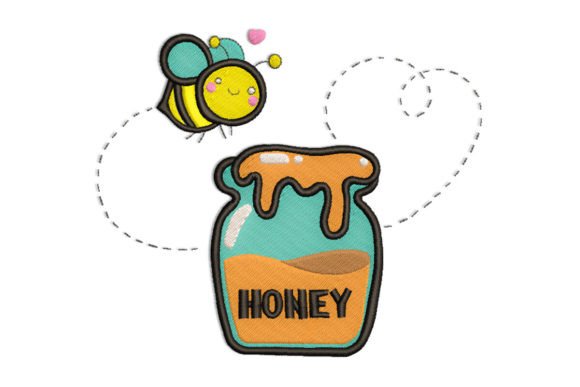
Opening the embroidery file, the first thing that stands out is the design's personality. The name itself, Bee Happy Honey Bee, suggests a friendly and approachable character. This is not a hyper-realistic scientific illustration of a bee. Instead, it reads as warm, cheerful, and intentionally charming. The description mentions "adorable and vibrant," which tells me the digitizer prioritized visual appeal and emotional connection over anatomical precision. For a small business, this is often exactly what you want. A design that makes people smile has real brand value. Whether stitched on a craft business apron, a boutique tote bag, or a bakery cap, this type of imagery signals approachability and handmade care. The Inspirational category placement reinforces that this design is meant to evoke a feeling, not just decorate fabric.
From a branding perspective, the bee motif carries strong associations with diligence, community, sweetness, and nature. Businesses in the food, floral, organic, handmade, and children's sectors can leverage these associations effectively. A design like Bee Happy Honey Bee can serve as a visual shorthand for values like sustainability, craftsmanship, and warmth. That is powerful positioning for a digital embroidery file that costs far less than a custom digitized logo.
Business Applications for Bee Happy Honey Bee
When I evaluate a machine embroidery design for commercial use, I mentally walk through every surface where a business might place it. Bee Happy Honey Bee passes many of these tests with flying colors.
Embroidered Patches
The structure of this design suggests it would work beautifully as an embroidered patch. A standalone bee motif with a clean outline can be stitched onto felt or twill backing, cut to shape, and applied to jackets, backpacks, hats, and branded merchandise. Patches are having a major moment in small business merch right now. They feel collectible, they are easy to apply, and they carry a handmade aesthetic that customers love. Bee Happy Honey Bee as a patch could become a signature brand asset for a boutique, a café, or a creative studio. I recommend testing the design at the intended patch size and checking whether the stitch density holds up on the patch material you plan to use.
Apron Embroidery and Staff Uniforms
For a bakery, florist, coffee shop, or handmade soap brand, a small bee embroidered on an apron chest or pocket creates instant brand identity without overwhelming the uniform. The vibrancy mentioned in the description suggests the design uses bright thread colors that will pop against neutral apron fabrics like natural linen, denim, or black cotton. Apron embroidery needs to be durable and washable, so I always advise testing the design on the actual fabric with proper stabilizer before committing to a full staff order. The Bee Happy Honey Bee design, if digitized with balanced stitch density, should handle repeated washing cycles without excessive puckering or thread breakage.
Cap Embroidery and Curved Surfaces
Cap embroidery is notoriously tricky. The curved surface, the center seam, and the limited flat area all demand careful design placement. A compact bee motif like Bee Happy Honey Bee could work well on the side panel of a cap or as a small front accent. I would be cautious about placing it across the full front of a structured cap unless the design is relatively small and the digitizing accounts for the curve. Always test on a cap frame before production. The design's level of detail will determine whether it reads clearly at cap embroidery size or becomes muddled.
Tote Bag Design and Merchandise
Tote bags are a staple of small business merch. They are affordable, useful, and offer a generous canvas for embroidery. Bee Happy Honey Bee could sit centered on a tote bag, scaled up to a medium size, and instantly transform a plain bag into a branded product. The organic, cheerful nature of the design aligns perfectly with the tote bag's association with sustainability and everyday use. I have seen similar designs perform exceptionally well on canvas totes, especially when stitched with high-contrast thread colors that stand out against the fabric texture.
Custom Apparel and Product Labels
For Etsy sellers, product designers, and handmade brands, small embroidered accents on clothing, linen goods, or packaging can elevate the perceived value of a product. A tiny bee stitched on a shirt cuff, a sleeve detail, or a fabric product label adds a signature touch that customers remember. Bee Happy Honey Bee works as a subtle brand mark that communicates care and attention to detail. The key is ensuring the design scales down cleanly without losing the defining features that make it recognizable as a bee.
Where to Use Caution with Bee Happy Honey Bee
No design is universal, and responsible designers always point out the limitations. With Bee Happy Honey Bee, there are a few scenarios where extra testing is essential.
Small patch sizes can be a challenge. If the design includes fine details like antennae, wing veins, or tiny lettering, those elements may close up or become unreadable at very small sizes. Always run a test stitch at the smallest size you intend to use and check whether the detail holds. If the design was not specifically digitized for small formats, you may need to scale up slightly or simplify by removing the smallest elements.
Dark uniforms require careful thread color selection. A design that looks vibrant on white or light fabric may lose contrast on black or navy. I recommend testing the design on dark fabric with the thread colors you plan to use. You may need to adjust the color palette or add a light underlay to make the design readable.
High stitch density on lightweight fabrics can cause puckering. If you plan to stitch Bee Happy Honey Bee on thin cotton, rayon, or performance fabrics, use a suitable stabilizer and consider reducing the density slightly if your software allows. Heavier fabrics like denim, canvas, and twill will handle dense stitching more gracefully.
Curved surfaces like cap fronts or sleeve edges demand proper hooping and placement. The design should be tested on the actual garment before production. A design that looks perfect flat may distort when stitched on a curve. This is standard embroidery wisdom, but it bears repeating for any business investing in branded merchandise.
How Bee Happy Honey Bee Affects Brand Identity
Brand identity is built in the details. A thoughtfully chosen embroidery design can communicate volumes about a business before a single word is spoken. Bee Happy Honey Bee projects a friendly, approachable, and slightly whimsical personality. It tells customers that the brand values warmth, positivity, and perhaps a connection to nature or handmade traditions. This type of visual identity works especially well for businesses that rely on personal connection, such as local shops, artisan studios, family-run bakeries, and creative service providers.
Customer trust grows when branding is consistent. If a business uses the same bee motif across aprons, tote bags, product labels, and social media, the repetition builds recognition. The Bee Happy Honey Bee design can serve as a unifying visual thread that ties together a brand's physical and digital presence. When customers see that bee stitched on a uniform or printed on a hang tag, they immediately connect it to the positive experience they had with the brand.
Professionalism in embroidery is not about formality. It is about execution. A cleanly stitched, well-placed design on quality merchandise tells customers that the business cares about the details. That is worth far more than a generic logo slapped on a cheap shirt. Bee Happy Honey Bee gives businesses the opportunity to present themselves as polished and intentional while still feeling human and accessible.
Practical Embroidery Designer Notes
Before any business commits to using Bee Happy Honey Bee for production, here are the steps I recommend every embroidery designer and shop owner follow.
Test in black and white first. Stitch the design in a single color on scrap fabric to evaluate the shapes, spacing, and overall balance without the distraction of color. This reveals whether the design reads clearly as a bee and whether any elements depend too heavily on color contrast to be understood.
Check small patch size performance. Stitch the design at the smallest size you plan to offer. Inspect for thread breaks, closed loops, and loss of detail. If the design struggles at small sizes, adjust your product offerings accordingly or find a version optimized for mini formats.
Review thread color contrast. The description calls the design vibrant, which is a good sign. But vibrant on screen does not always translate to vibrant on fabric. Test your chosen thread colors on the actual fabric and under different lighting conditions. Make sure the bee's body, wings, and any accent details are clearly distinguishable from each other and from the background fabric.
Inspect spacing and digitizing quality. Look closely at the stitch file. Are the stitches evenly distributed? Are there unnecessary trims or jumps? Is the underlay appropriate for the fabric type? A well-digitized embroidery file will save you hours of troubleshooting and produce a cleaner finished product.
Confirm hoop size compatibility. Check the design's dimensions and ensure they fit comfortably within your available hoop sizes. Leave enough margin around the design for proper hooping and stabilizer placement. If the design is close to the edge of your hoop, you risk registration issues and poor stitch quality.
Test on real fabric with proper stabilizer. This cannot be overstated. The fabric you plan to use for production should be the fabric you test on. Cutaway, tearaway, or water-soluble stabilizer choices depend on the fabric type and the design's stitch density. Run a full test, wash the item, and inspect the result before presenting anything to a client or customer.
Create a printable mockup for client approval. Before stitching, show clients a realistic representation of how the design will look on their product. This sets expectations and prevents misunderstandings. A good mockup can be the difference between a smooth approval process and a costly redo.
Compare the design beside other design assets. If the business uses multiple embroidered elements, check that Bee Happy Honey Bee sits harmoniously alongside them. Consistent sizing, similar stitch density, and complementary color palettes create a cohesive brand look across products.
Confirm commercial licensing before business use. The product description for Bee Happy Honey Bee does not explicitly state the commercial licensing terms, so I strongly advise checking with the seller before using this embroidery file on products you intend to sell. Many digital embroidery files are sold for personal use only, and commercial use may require a separate license. This is a critical step that protects your business legally and ethically.
Final Thoughts on Bee Happy Honey Bee for Business
From a professional embroidery designer's perspective, Bee Happy Honey Bee offers strong potential for small business merchandise, branded patches, and uniform accents. The design's cheerful personality, its alignment with the Inspirational category, and its broad applicability across apparel, accessories, and product packaging make it a versatile asset. The key to success lies in thorough testing, smart placement choices, and attention to the practical details of commercial embroidery. When executed well, this design can help a business build a recognizable, trustworthy, and genuinely appealing brand presence. Stitch it, test it, wash it, and then let it fly.